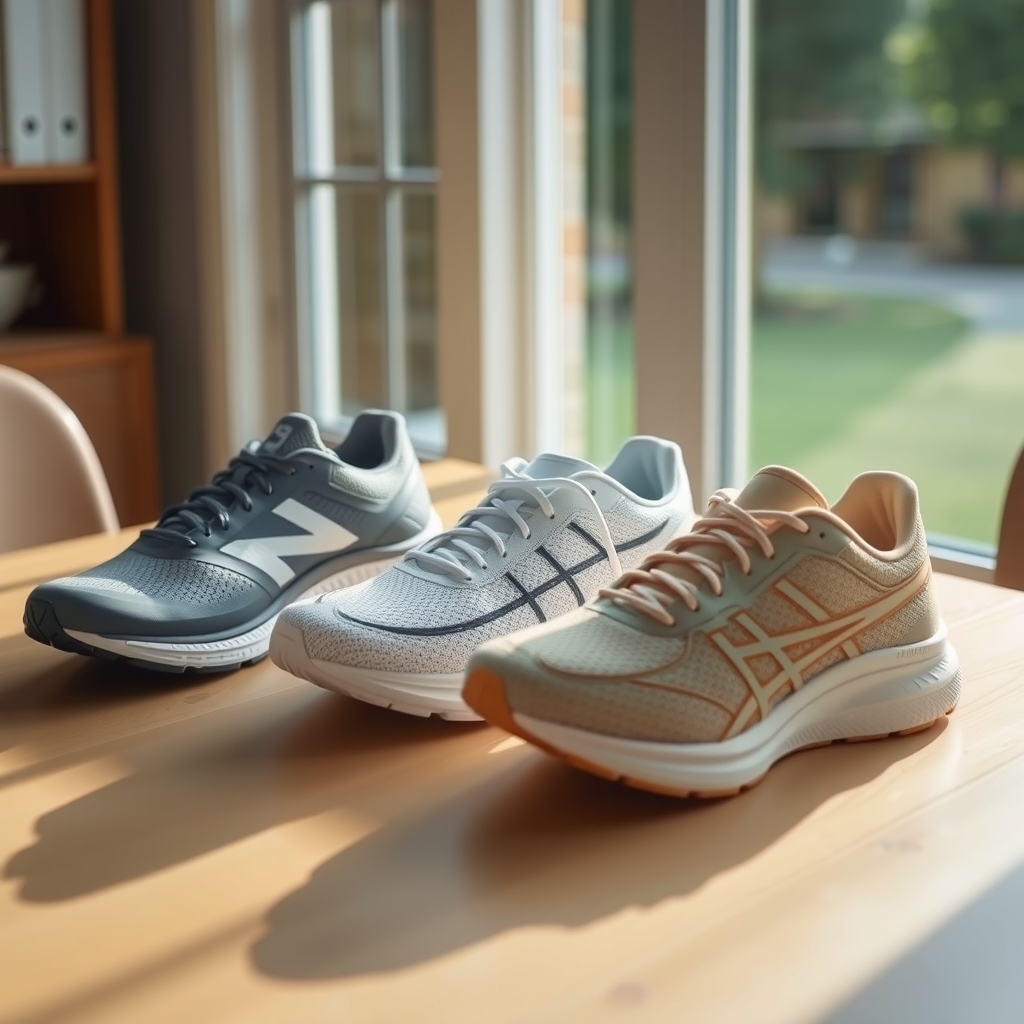
Choosing running shoes can feel overwhelming with so many options and technical terms, but the right pair starts with understanding your own body. This guide is for runners of any experience level who want to make informed decisions instead of guessing based on brand names or colors. Whether you are training for a first 5K, logging weekly long runs, or returning after time off, learning how your feet move helps you narrow the field to models that actually suit you.
After reading this article, you will be able to:
- Identify your arch type using simple at-home checks
- Recognize whether your gait leans toward overpronation, neutral motion, or supination
- Match shoe categories such as stability, neutral, or motion control to your mechanics
- Evaluate cushioning, heel-to-toe drop, and upper fit for your preferred distances
- Spot wear patterns that signal it is time for a new pair
Use this information as a starting point. If you have persistent pain or a history of injuries, consider checking with a medical professional before making major changes to your footwear.
Understanding Your Foot Arch Type and Its Impact on Shoe Selection
Your foot arch acts as a natural shock absorber and lever, influencing how force travels through your legs with every step. Understanding whether you have a low, neutral, or high arch helps narrow the field of shoes that will work with your mechanics rather than against them.
A simple way to estimate your arch type at home is the wet test. Wet the sole of your foot, step onto a piece of cardboard or a paper bag, and examine the imprint. If you see almost the entire sole with little curve along the inner edge, you likely have a low arch or flat foot. A distinct curve along the inside with a band connecting heel and forefoot about half the width of your foot suggests a neutral arch. If only a thin strip or just the heel and ball of the foot appear, your arch is high.
Low arches tend to be flexible and often collapse inward when you land, a motion linked to overpronation. Shoes labeled as stability or motion control usually add firmer foam or a medial post on the inner side to slow that roll and guide the foot toward a straighter path. Neutral arches typically handle impact well on their own, so a neutral-cushioned shoe with even foam density often works best. High arches are usually more rigid and absorb less shock naturally; many people find that a well-cushioned neutral shoe with a softer midsole helps make up for that reduced natural give.
Arch height can change over time due to age, injury, pregnancy, or training volume. If you have persistent pain in the feet, knees, or hips, consider checking with a podiatrist or physical therapist for a hands-on assessment before investing in a new pair.
Identifying Your Gait Pattern: Overpronation, Neutral, and Supination
Your gait pattern describes how your foot moves from the moment it strikes the ground until it pushes off again. While arch type gives you a static snapshot, gait reveals the dynamic story. The three main patterns — overpronation, neutral, and supination — each place different demands on a shoe.
Overpronation happens when the foot rolls inward excessively after landing. The arch collapses more than ideal, and the ankle tips toward the midline. You might notice the inner edge of your old shoes wearing down faster than the rest. Many people with flexible, low arches fall into this group, but not everyone does. A shoe with a firmer medial post or guided rails can help limit that inward motion and keep the lower leg aligned.
Neutral gait shows a moderate, controlled inward roll — just enough to absorb shock naturally. The foot lands on the outside of the heel, rolls through the midfoot, and pushes off evenly from the forefoot. Wear on an old pair tends to be fairly uniform across the heel and forefoot. Neutral runners usually do well in shoes without aggressive stability features, letting the foot move as it wants to.
Supination (sometimes called underpronation) is the opposite: the foot stays rigid and rolls outward, placing load on the lateral edge. High, rigid arches are common here. You’ll often see heavy wear on the outer heel and forefoot. Because the foot doesn’t pronate enough to dissipate force, cushioning becomes the priority — look for a softer, more compliant midsole.
Quick self-checks: – Wet foot test on cardboard: a full imprint suggests overpronation; a thin crescent suggests supination; something in between points toward neutral. – Video yourself from behind on a treadmill or have a friend watch you run at an easy pace. – Check the wear pattern on a well-used pair of running shoes.
These observations are clues, not diagnoses. If you have recurring aches or a history of injury, a physical therapist or sports medicine professional can confirm what your feet are doing and why.
Matching Shoe Categories to Your Biomechanical Needs
Once you understand your arch type and gait pattern, the next step is translating that information into the right shoe category. Manufacturers generally group running shoes into three main buckets: neutral, stability, and motion control. Neutral shoes are built for runners with normal to high arches who supinate or maintain a neutral stride. They offer cushioning without added medial support, allowing the foot to move naturally. Many people find these models comfortable for long runs because they do not restrict the foot’s inherent motion.
Stability shoes target mild to moderate overpronation. They typically feature a firmer density foam or a guide rail on the medial side to slow the inward roll. This design can help align the lower leg and reduce strain on the knee and shin. If your wet test shows a low arch and your wear pattern reveals excessive inner-edge wear, a stability model is often a sensible starting point.
Motion control shoes provide the highest level of support for severe overpronation and very flat arches. They incorporate extended medial posts, stiffer heels, and straighter lasts to limit excessive motion. These shoes tend to be heavier and less flexible, so they are usually reserved for runners who have not found relief in stability options.
- Neutral: best for high arches, supination, or neutral gait
- Stability: best for low arches with mild to moderate overpronation
- Motion control: best for very flat arches with severe overpronation
Specialty categories like trail, racing, and maximalist cushioning exist within these frameworks. Trail shoes add grip and protection; racing flats prioritize weight savings; maximalist models stack thick midsoles for impact absorption. Your primary biomechanical need should guide the base category, then layer in terrain and distance preferences. If you are unsure which group fits you, a visit to a running specialty store for a gait analysis or a conversation with a physical therapist can clarify the choice.
Evaluating Cushioning Levels and Midsole Technologies for Your Running Style
Cushioning is not simply about softness; it is about how the midsole manages impact forces and returns energy during your stride. Most modern midsoles use variations of EVA (ethylene-vinyl acetate) or polyurethane blends, often infused with nitrogen or CO2 to create lighter, more responsive foams. A higher stack height generally means more material to compress, which many people find comfortable for long, easy miles where impact protection is the priority. Conversely, a lower stack height with a firmer density often provides better ground feel and stability for faster tempo work or runners who prefer a more connected sensation.
The geometry of the midsole matters as much as the foam chemistry. Rockered profiles — where the sole curves upward at the toe and sometimes the heel — are designed to smooth the transition from landing to toe-off. This shape may reduce the workload on the calf and Achilles complex, which can be helpful for runners managing stiffness in those areas. However, some runners feel unstable on aggressive rockers, particularly on technical trails or during sharp turns.
Midsole technologies you will encounter include: – Single-density foam tuned for a balanced ride – Dual-density constructions with a firmer medial post to resist excessive inward roll – Plates made of nylon, PEBA, or carbon fiber embedded in the foam to add stiffness and propulsion – Segmented crash pads or decoupled heel designs that allow independent movement
If you are recovering from a stress injury or dealing with joint sensitivity, a maximally cushioned neutral shoe may offer the protection you need. If you prioritize speedwork, a lighter shoe with a responsive plate and moderate stack height might suit you better. There is no universal "best" foam; the right choice depends on your pace range, distance goals, and how your body tolerates load. When in doubt, visit a specialty running shop where you can test two or three distinct models on a treadmill. If you have a history of stress fractures or chronic joint pain, check with a sports medicine professional before committing to a dramatically different cushioning profile.
Assessing Heel-to-Toe Drop and Its Influence on Running Mechanics
Heel-to-toe drop, sometimes called offset, is the difference in height between the heel and forefoot of a shoe measured in millimeters. Traditional running shoes often feature a drop of 10 to 12 millimeters, while lower-profile models range from zero to 8 millimeters. This measurement influences how your foot strikes the ground and how forces travel up your leg. A higher drop tends to shift impact toward the heel and can reduce strain on the Achilles tendon and calf muscles. Many people find this helpful if they have a history of Achilles tightness or calf strains. A lower drop encourages a more midfoot or forefoot landing, which may increase load on the calf complex and Achilles but can reduce braking forces at the knee.
Changing drop abruptly can stress tissues that aren’t accustomed to the new loading pattern. If you are considering a significant shift, transition gradually over several weeks by alternating the new shoes with your current pair on shorter runs. Pay attention to any new soreness in the calves, Achilles, plantar fascia, or shins. Your preferred drop may also vary by workout type; some runners prefer a higher drop for long, easy miles and a lower drop for faster sessions or racing.
- Start with a drop similar to what you have run in comfortably before.
- Adjust by no more than 4 millimeters at a time.
- Use walk breaks or shorter runs during the first few weeks.
- Monitor for persistent discomfort that does not resolve with rest.
If you have a history of lower-leg injuries or are unsure which drop suits your mechanics, a physical therapist or sports medicine professional can help assess your gait and guide the transition safely.
Testing Fit, Sizing, and Upper Construction for Long-Distance Comfort
Even the most technically appropriate shoe will fall short if the physical fit does not honor the shape and volume of your foot. Start by trying shoes later in the day when your feet are naturally slightly swollen from daily activity, mimicking the expansion that occurs during a long run. Wear the socks you plan to run in, along with any orthotics or insoles you use regularly. Stand up and check for roughly a thumb’s width of space between your longest toe and the shoe’s end; this gap accommodates forward slide on descents and prevents toenail trauma. The midfoot should feel snug but not tight, with no pressure points along the sides or top. Your heel should lock in place with minimal slippage when you walk or jog in place.
Upper construction plays a quiet but critical role in comfort over many miles. Engineered mesh varies widely in stretch, breathability, and structural support. Some uppers use targeted overlays or fused films to hug the arch and midfoot without creating hot spots, while others rely on a more relaxed, accommodating knit. Pay attention to the tongue design; a gusseted or semi-gusseted tongue stays centered and keeps debris out, while a thin, movable tongue may bunch and cause irritation. The heel counter should cup your Achilles area firmly without digging in.
- Check for seams or internal stitching that might rub during high-mileage weeks.
- Ensure the lacing system allows you to fine-tune tension across different zones of the foot.
- Walk on a hard surface and do a few easy strides; note any pinching, slipping, or numbness.
Many people find that going up a half size from their street shoe size works well, but sizing varies between brands and even models. If you have a history of foot issues or persistent discomfort, checking with a podiatrist or physical therapist can help clarify whether a specific last shape or width option suits your anatomy better.
When to Replace Running Shoes Based on Wear Patterns and Mileage
Most runners track mileage as a rough guide, but the calendar and the odometer only tell part of the story. A common benchmark suggests replacing shoes every 300 to 500 miles, yet factors like body weight, running surface, temperature, and your individual gait can shorten or extend that window significantly. Lighter runners on soft trails may get more life out of a pair than heavier runners pounding hot asphalt, so learning to read the physical clues on the shoe itself is often more reliable than hitting a specific number.
Start by examining the midsole. Press your thumb into the foam under the heel and forefoot; it should offer some resistance and spring back. If it feels permanently compressed, dead, or you can see deep horizontal creases that don't disappear when unweighted, the cushioning has likely lost its ability to protect your joints. Flip the shoe over and study the outsole wear. Even abrasion across the forefoot and lateral heel is normal, but smooth, bald spots — especially if they angle sharply toward the inside (medial) or outside (lateral) edge — signal that the shoe is no longer guiding your foot neutrally.
- Place the shoes on a flat table and view them from behind; a visible lean to one side means the support structure has collapsed.
- Check the heel counter by squeezing the back; it should feel firm, not flexible or crushed.
- Inspect the upper for tears, stretched mesh, or a heel liner that has worn through, which can cause blisters and instability.
Rotating between two pairs lets the foam decompress between runs and gives you a direct comparison — when the older pair feels noticeably harsher or less stable than the fresher one, it’s time to retire it. Keep a simple log or use an app to note the start date, but let the physical evidence make the final call. If you’re unsure whether wear patterns point to a biomechanical issue, a specialty running store or a physical therapist can help interpret them.
Putting It Together
You now have the pieces: your arch type, your gait tendency, the shoe category that aligns with both, a cushioning level that matches your typical distance, a drop that feels natural, and a fit checklist you can use in the store. The next step is a low-pressure first week that lets your body tell you what works.
Start with two or three easy runs of 20 to 30 minutes on familiar, forgiving surfaces. Wear the new shoes only for those runs; keep your old pair for walking or cross-training so you have a baseline for comparison. Pay attention to any hot spots, unusual fatigue, or changes in how your knees and hips feel afterward.
- Day 1: short shakeout run, note immediate comfort
- Day 3: repeat same distance, check for pressure points
- Day 5: slightly longer if the first two felt fine
- Days 2, 4, 6, 7: rest or non-running activity
If something feels off — persistent aching, numbness, or a new pain — swap back to the old pair and reassess fit or category. Many people find a brief break-in period normal, but sharp discomfort is a signal to stop. When in doubt, a quick conversation with a physical therapist or sports-medicine professional can save weeks of frustration.
More from the blog
- How to Stretch Your Hamstrings Safely After Sitting All Day
- How to Design a Kitchen Layout That Makes Healthy Cooking Easier
- How to Structure a Weekly Walking Plan That Builds Endurance Safely
From FitLife Solutions
Browse all our practical health and fitness guides at fitlifesolutions.site.
New practical health guides and articles on WhatsApp: follow our channel.
Earn by sharing our books with your audience: join our affiliate channel on Telegram for one ready-to-post book a day.
This article is for general information only and is not a substitute for professional medical advice. Talk to your doctor or another qualified health professional before changing your diet, exercise or health routine, especially if you have a medical condition or take medication.