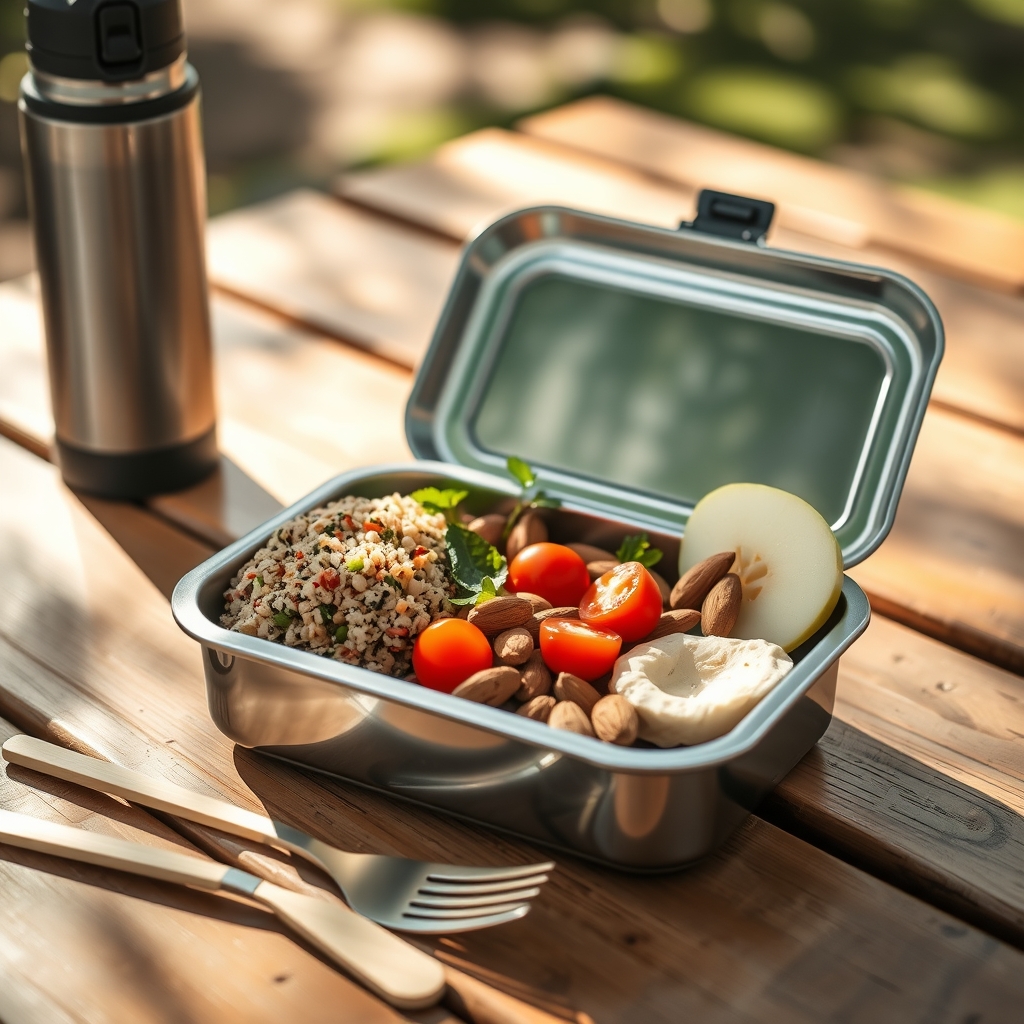
Packing lunch when your workplace has no microwave, no fridge, and no way to heat anything up forces you to think differently about food safety, texture, and satisfaction. This guide is for anyone who eats at a desk, in a vehicle, on a job site, or in a break room with only a plug for a kettle — people who need a real meal that travels at room temperature and still tastes good at noon.
After reading, you will be able to:
- Build a shelf-stable pantry of proteins, fats, and carbs that require no cooking
- Assemble balanced cold-plate lunches and mason jar salads that stay crisp and safe until lunch
- Pack snack-style bento boxes that deliver steady energy through long shifts
- Apply food safety rules using insulated bags, ice packs, and time limits for perishables
- Run a simple weekly prep routine so you never scramble in the morning
No special equipment, no reheating, and no compromise on nutrition or flavor.
Building a No-Cook, No-Chill Pantry: Shelf-Stable Proteins, Fats, and Carbs
Start with proteins that need no refrigeration until opened. Canned fish — sardines, mackerel, salmon, light tuna — deliver omega-3s and 15 to 25 grams of protein per tin; choose water- or olive-oil-packed versions and drain well. Foil pouches are lighter and eliminate the can opener. Shelf-stable chicken or turkey packets work similarly. For plant options, keep vacuum-sealed lentils, black beans, or chickpeas on hand; they’re ready to eat after a rinse if you have a sink, or straight from the pouch if you don’t. Jerky, biltong, and meat sticks add chew and salt; look for brands with under 400 milligrams sodium per serving. Nut butters — peanut, almond, sunflower — supply fat and protein in squeeze packets or small jars. Hard cheeses like aged cheddar, gouda, or parmesan wedges can sit at cool room temperature for a day; wax-coated mini rounds last longer. Individual hummus cups and tahini packets round out the spreadable category.
- Canned or pouched fish (sardines, mackerel, salmon, tuna)
- Shelf-stable chicken or turkey packets
- Vacuum-sealed cooked beans and lentils
- Jerky, biltong, or low-sodium meat sticks
- Single-serve nut butter packets
- Wax-coated hard cheese mini rounds
- Individual hummus or tahini cups
Healthy fats keep energy steady. Packets of olives, roasted nuts, seeds, or trail mix with no added sugar travel without bruising. Avocado oil or extra-virgin olive oil mini bottles let you dress greens at the desk. For carbs, choose intact grains that don’t turn gummy: microwaveable rice or quinoa pouches (eat cold), precooked farro, or whole-grain crackers with at least three grams of fiber per serving. Dense breads like rye crisps, whole-wheat pita, or sprouted-grain tortillas hold up better than sliced sandwich bread. Dried fruit — unsweetened apricots, figs, raisins — adds quick glucose and fiber; pair with nuts to blunt the sugar spike. Store everything in a designated drawer or tote so you can grab, pack, and go without rummaging.
Assembling Balanced Cold-Plate Lunches: Protein, Produce, and Flavor Without Reheating
Start with a sturdy protein base that needs no heating: canned fish, smoked tofu, hard salami, or pre-cooked lentils from a shelf-stable pouch. Drain well and pat dry so excess liquid doesn't turn other components soggy. Layer in produce that holds up for hours — think shredded carrots, thinly sliced radishes, bell pepper strips, cherry tomatoes halved, or marinated artichoke hearts. Avoid delicate greens unless you pack them in a separate small container. Add a fat source for satiety and flavor: a spoonful of olive tapenade, a few olives, a drizzle of tahini, or a small wedge of aged cheese wrapped in parchment.
Build flavor without a stove by using pantry acids and aromatics. A quick toss of protein and vegetables with lemon juice, vinegar, mustard, capers, or a spoonful of pesto wakes everything up. Sprinkle with seeds, nuts, or crispy fried onions just before eating to keep texture. Many people find that letting the assembled plate sit for ten minutes before packing allows flavors to meld without wilting.
- Use a divided container or silicone cups to keep wet and dry items apart until lunch.
- Pack a small jar of extra dressing or sauce to refresh the plate if it looks dry.
- Include a whole-grain cracker, flatbread, or rice cake on the side for scooping.
- If a component turns mushy or smells off, discard it and rely on the shelf-stable backups in your bag.
Mason Jar Salads and Grain Bowls That Stay Crisp and Safe All Morning
The secret to a mason jar salad that still crunches at noon is strict layering. Start with the heaviest, wettest ingredients at the bottom and finish with the lightest, driest on top. Pour two tablespoons of vinaigrette or hummus-thinned lemon juice into the jar first. Add a dense grain such as quinoa, farro, or pre-cooked brown rice — these absorb flavor without turning mushy. Next, layer sturdy vegetables: chickpeas, diced cucumber, shredded carrot, bell pepper strips, and cherry tomatoes halved. Follow with shelf-stable proteins like canned tuna, smoked salmon pouches, or marinated tope cubes. Sprinkle nuts, seeds, or roasted chickpeas for fat and crunch. Top with delicate greens — baby spinach, arugula, or torn romaine — pressed down gently. Seal the jar and keep it upright in an insulated bag with a slim ice pack against the metal lid.
For grain bowls that travel in a rectangular container, use the same bottom-up logic but keep the dressing in a separate tiny jar. Cook grains the night before, spread them on a sheet pan to steam-dry, then portion. Roasted sweet potato cubes, pickled onions, and olives hold texture for hours. Add fresh herbs at the very top so they stay bright.
- Dressing on the bottom or on the side — never in the middle.
- Dry grains thoroughly; surface moisture creates soggy lettuce.
- Pack a fork and a napkin; shaking the jar mixes everything evenly.
- If the bag warms up, eat within four hours or toss the jar — safety first.
Snack-Style Bento Boxes: Modular Nutrition for Long Desk Hours
Think of a bento box as a choose-your-own-adventure lunch: small compartments keep flavors separate, portions stay reasonable, and you can graze across the afternoon without a single reheating step. Start with a sturdy container that has three to four sections or use silicone cups inside a larger box to create your own dividers.
Build each box around a shelf-stable protein anchor. Tinned fish, smoked tofu, hard-boiled eggs (eaten within four hours of packing), vacuum-sealed chicken strips, or marinated tempeh all hold up well. Add a fat source for satiety — olives, nuts, seeds, a packet of nut butter, or a few cubes of aged cheese that tolerates cool room temperatures. For carbohydrates, include whole-grain crackers, rice cakes, a small wrap, or a portion of pre-cooked quinoa or farro tossed with olive oil and lemon so it doesn't clump.
Fill the remaining spaces with produce that travels crisp. Snap peas, baby carrots, radish halves, cucumber spears, grape tomatoes, and apple slices (tossed with a squeeze of lemon) stay firm for hours. A tiny container of hummus, tahini drizzle, or mustard gives you a dip without needing a spoon.
- Pack a wet wipe and a fork so you can eat at your desk without a trip to the kitchen.
- If a compartment leaks, silicone cups contain the mess and keep crackers dry.
- Rotate proteins and produce weekly to avoid flavor fatigue; many people find a Sunday "component prep" session makes assembly take under five minutes each morning.
- When the workday runs late, the modular layout lets you eat a little now and save the rest without the whole meal warming up.
If you want this in more depth, our book Healthy Grilling: Simple Techniques for Nutritious Outdoor Cooking covers it step by step.
Food Safety Strategies: Insulated Bags, Ice Packs, and Time Limits for Perishables
An insulated lunch bag is your first line of defense. Choose one with a thick foam or reflective lining and a zippered closure that seals completely. Soft-sided bags pack flatter in a backpack, while boxier versions hold containers upright and reduce leaks. Place a frozen gel pack or a frozen water bottle against the most perishable item — usually the protein or a dairy-based dip — and put a second pack on top if the commute exceeds thirty minutes. A frozen bottle doubles as cold drinking water by lunchtime.
Pack the bag tightly; air gaps warm faster than a full load. If you have space, tuck a small kitchen towel around containers to limit movement and add insulation. Keep the bag out of direct sun, off a hot car seat, and away from radiators or servers at the office. A desk drawer or a shaded corner works well.
Follow the two-hour rule for anything that normally lives in a fridge: cut fruit, hummus, hard-boiled eggs, cheese, deli meat, yogurt, or cooked grains. The clock starts when the food leaves home refrigeration. If your commute plus morning meeting time pushes past two hours, swap one perishable component for a shelf-stable alternative — think canned fish, jerky, nut butter, or whole fruit with intact skins.
- Freeze packs solid the night before; partially frozen packs lose cooling power quickly.
- Use a fridge thermometer inside the bag occasionally; it should read 40°F or below when you open it at lunch.
- Discard any perishable that smells off, looks slimy, or has been above 40°F for more than two hours.
- Wipe the bag interior weekly with a diluted vinegar solution to control odor and bacteria.
Weekly Prep Routines: Batch-Washing Produce, Portioning Proteins, and Rotating Menus
Set aside 30 minutes on Sunday to turn your pantry staples into grab-and-go components for the week. Start with produce: fill a large bowl with cool water and a splash of vinegar, submerge sturdy vegetables like carrots, bell peppers, cucumbers, and cherry tomatoes, then spin dry in a salad spinner or pat thoroughly with clean towels. Moisture is the enemy of crisp texture, so ensure everything is bone-dry before storing in airtight containers lined with a paper towel to absorb residual dampness. Delicate greens such as spinach or arugula keep best washed, spun, and stored separately in a rigid container so they don't get crushed.
Portion proteins next. Drain and rinse canned beans, chickpeas, or lentils; divide into half-cup servings in small containers or silicone cups. Open packets of tuna, salmon, or chicken and mix single servings with a spoonful of shelf-stable mayo, mustard, or olive oil plus herbs so they're seasoned and ready to dump onto a salad or into a wrap. Hard-boiled eggs (if you have stove access once a week) peel and store submerged in water to stay moist. Nut butters, seed packs, and individually wrapped cheese rounds or shelf-stable salami sticks can be counted out into daily allotments.
Rotate menus by choosing two "base" grains such as pre-cooked quinoa pouches, instant rice, or couscous and two flavor profiles — perhaps Mediterranean with olives, feta, and lemon-herb dressing one week, and Southwest with black beans, corn, cumin-lime vinaigrette the next. Pre-portion dressings into leak-proof jars; shake before adding. Keep a running list on your phone of what you packed each day so you don't repeat the same combo three times in a row. When something turns mushy or smells off, toss it immediately and swap in a backup shelf-stable item from your desk stash.
Putting It Together
Start Sunday by washing and drying a week’s worth of sturdy produce — carrots, bell peppers, cucumbers, cherry tomatoes, snap peas — and storing them in lined containers so they’re ready to grab. Portion shelf-stable proteins into small jars or bags: canned tuna, salmon, chicken, beans, lentils, hard cheeses, nuts, seeds, and jerky. Cook a batch of quinoa, farro, or rice if you have stove access; otherwise pick up precooked pouches. Assemble three mason jar salads layering dressing, grains, protein, veg, and greens on top; seal and refrigerate. Pack two bento boxes with crackers, cheese, olives, fruit, hummus packets, and nut butter. Place everything in an insulated bag with two frozen gel packs each morning. Monday through Wednesday eat the jars; Thursday and Friday eat the bento boxes. Keep a backup stash at your desk: single-serve tuna, whole-grain crackers, a nut butter packet, and a piece of fruit that travels well. If a pack warms up or you forget it, swap in the backup and move the chilled meal to the next day. Adjust portions after day three based on hunger and schedule.
More from the blog
- How to Cook for One Without Food Waste
- How to Pack a Nut-Free School Lunch That Stays Fresh Until Noon
- How to Organize Your Fridge and Pantry to Reduce Food Waste
From FitLife Solutions
Our book Healthy Grilling: Simple Techniques for Nutritious Outdoor Cooking goes further, as a digital eBook (PDF and EPUB) you can read on any device.
Browse all our practical health and fitness guides at fitlifesolutions.site.
New practical health guides and articles on WhatsApp: follow our channel.
Earn by sharing our books with your audience: join our affiliate channel on Telegram for one ready-to-post book a day.
This article is for general information only and is not a substitute for professional medical advice. Talk to your doctor or another qualified health professional before changing your diet, exercise or health routine, especially if you have a medical condition or take medication.