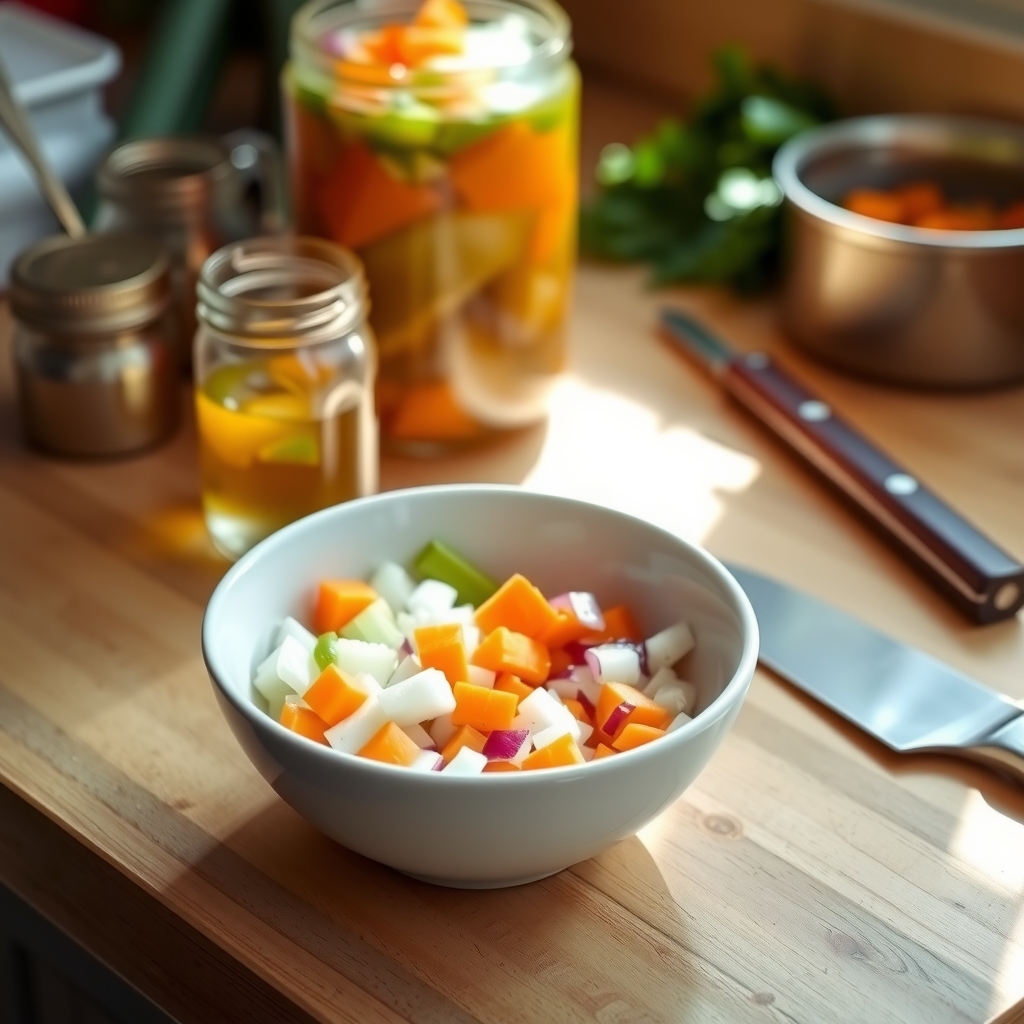
Cooking for one often feels like a battle against package sizes and perishable timelines. You buy a bunch of cilantro for one recipe and watch the rest turn to slime, or you cook a pot of chili that haunts your fridge for a week until you toss it. This guide is for anyone tired of that cycle — whether you live alone, travel for work, or simply eat on a different schedule than your household.
After reading, you will be able to:
- Shop for exactly what you need using bulk bins, deli counters, and strategic frozen aisles
- Plan overlapping meals so a single ingredient — like a roasted chicken or a block of tofu — feeds you three different ways
- Assemble satisfying no-cook plates when the stove stays off
- Prepare proteins and grains using only hot water, a microwave, or acid
- Freeze single portions the night you cook them so nothing lingers
- Turn stems, peels, and herb roots into stocks, pestos, and crisp toppings
- Organize your fridge and freezer with zones and labels that prevent forgotten food
You will waste less, spend less, and eat better — without cooking every night.
Strategic Grocery Shopping for Single-Serve Portions
Buying for one means ignoring the "family size" logic that dominates most grocery stores. Start with a loose meal map for the next four to five days — just proteins, a grain base, and two or three vegetables you genuinely like — so you walk in with a filter instead of a wish list. Head straight for the bulk bins and the service counters. Ask the butcher for a single chicken thigh, two pork chops, or a quarter pound of ground turkey; most will rewrap it gladly. At the fish counter, request one portion sized for your pan. In produce, choose loose items over bags: three carrots, half a head of cabbage, a handful of green beans. Many stores will split a bunch of kale or a bag of grapes if you ask at the service desk.
- Treat the salad bar and olive bar as your portion-controlled pantry: grab exactly the roasted beets, chickpeas, or marinated artichokes you need for tonight's grain bowl.
- Buy herbs as living plants in small pots; snip what you need and keep the rest alive on a windowsill.
- Choose eggs in six-packs or cartons of eight, and dairy in single-serve cups or small blocks you can grate yourself.
- Skip pre-cut fruit and veg unless you'll use every piece today; the premium price and shorter shelf life work against you.
If plans shift — a late meeting, a dinner invite — pivot immediately. Raw meat goes into the freezer in a labeled bag that night. Wilted greens become pesto or soup base. A half-avocado gets a squeeze of lemon, tight wrap, and a spot in the fridge for tomorrow's toast. The goal isn't perfection; it's a system that absorbs change without creating waste.
Mastering Ingredient Cross-Utilization Across Meals
The core strategy for cooking solo without waste is designing a "component map" before you shop. Pick three versatile base ingredients — one hearty green, one neutral grain, one adaptable protein — that can pivot across cuisines and textures for five to seven days. A bunch of kale, a cup of dry farro, and a block of firm tofu (or a dozen eggs) cover breakfast, lunch, and dinner with zero repetition fatigue.
Start by prepping each component in its most neutral form. Wash and strip kale leaves; store stems separately for sautéing. Cook farro in unsalted water; spread on a tray to cool fast so grains stay distinct. Press tofu and cut into half-inch slabs, or boil eggs to medium. Keep everything plain in separate containers. Seasoning happens at assembly, not during prep, so the same farro becomes a lemon-herb breakfast bowl with a fried egg, a Mediterranean lunch with feta and olives, and a stir-fry base with soy-ginger glaze at dinner.
- Breakfast: warm farro + wilted kale + runny egg + chili oil
- Lunch: cold farro + massaged kale + cubed tofu + cucumber + tahini drizzle
- Dinner: farro fried "rice" with kale stems, tofu crumbles, garlic, frozen peas
- Snack: kale chips (stems too) baked with nutritional yeast
When a component hits day four and texture shifts — farro gets sticky, kale wilts — pivot instantly. Blend wilted kale into pesto with nuts and cheese; freeze in an ice cube tray. Fry sticky farro into crisp cakes for a salad topper. Crumble aging tofu into a scramble with turmeric and nutritional yeast. The map isn't rigid; it's a decision tree that keeps you from staring at the fridge wondering what to make.
No-Cook Assembly Meals Using Fresh Components
Start with a sturdy base that requires zero heat: pre-washed salad greens, shredded cabbage, cooked grains from a pouch, or a bed of hummus spread on a plate. Layer on proteins that are ready to eat — canned beans rinsed well, smoked fish, boiled eggs from the store, cubed tofu marinated in soy sauce, or rotisserie chicken pulled into shreds. Add texture with raw vegetables sliced thin: radishes, cucumber, fennel, carrot ribbons made with a peeler, or snap peas halved lengthwise. Fruit brings brightness; try segmented orange, diced apple tossed with lemon juice, or a handful of berries.
Finish with fat and acid. A drizzle of olive oil and vinegar works, but keep a few homemade dressings in small jars — lemon-tahini, miso-ginger, yogurt-dill — so assembly takes seconds. Sprinkle toasted nuts, seeds, or crumbled cheese last so they stay crisp.
- Mediterranean jar: farro, chickpeas, cucumber, tomato, olives, feta, oregano, red wine vinaigrette
- Asian slaw bowl: shredded cabbage, edamame, carrot, green onion, sesame-ginger dressing, cashews
- Mexican plate: black beans, corn, avocado, pico de gallo, cotija, lime crema, tortilla chips for scooping
If greens wilt faster than expected, blend them into a pesto with oil, nuts, and cheese — it keeps a week in the fridge and dresses pasta, eggs, or sandwiches. When canned beans taste flat, mash half with garlic, oil, and vinegar for an instant spread. A soft avocado? Mash it directly on toast with chili flakes and salt. The goal is a meal assembled in under ten minutes that feels complete, not compromised.
Heat-Free Preparation Techniques for Proteins and Grains
Canned fish, beans, and lentils are the backbone of heat-free protein. Drain a tin of sardines or mackerel, break it up with a fork, and toss it with lemon juice, chopped parsley, and a drizzle of olive oil; it’s ready for toast, crackers, or a bed of greens. For beans, rinse them well under cold water to cut sodium and the canned taste, then mash roughly with garlic powder, cumin, and a splash of vinegar for an instant dip or sandwich spread. Pre-cooked lentils from the refrigerated section need only a stir into vinaigrette and diced vegetables for a composed salad that holds for days.
Grains that hydrate without heat save the most time. Couscous works by pouring boiling water over it, but bulgur wheat and rolled oats soften in cold liquid given enough hours. Combine a half-cup of bulgur with double the water or broth in a jar, shake, and refrigerate overnight; the grains plump fully and stay distinct. Quick oats turn creamy in yogurt or milk within twenty minutes — stir in chia seeds to thicken further. For rice, the only reliable no-heat route is pre-cooked pouches or freezing your own portions ahead (see the batch-cook section).
- Sardines + lemon + herbs = protein base for three lunches
- Rinsed canned beans + acid + spice = spread, filling, or salad topper
- Bulgur or oats + cold liquid + time = ready-to-eat grain component
- Pre-cooked lentils + vinaigrette + raw veg = complete bowl in two minutes
If a grain stays hard after soaking, it’s usually too coarse for cold hydration — switch to a finer grade or use a pre-cooked version next time.
If you want this in more depth, our book One-Pot Healthy Dinners: Simple Weeknight Cooking Made Practical covers it step by step.
Single-Serve Batch Cooking with Immediate Freezing
Cook a full recipe once, portion it immediately, and freeze the extras before they ever sit in the fridge long enough to spoil. This works best with dishes that hold moisture and texture after thawing: chili, lentil stew, bolognese, curry, cooked beans, and tomato-based sauces. Avoid freezing dishes heavy on cream, potatoes, or delicate greens; they tend to separate or turn mushy.
Let the finished dish cool slightly — no more than an hour on the counter — then ladle into single-serve containers. Silicone muffin trays or 1-cup freezer jars work well; once frozen solid, pop the blocks into a labeled freezer bag to save space. Write the dish name and date on the bag with a marker. Most of these meals stay good for two to three months.
Reheat straight from frozen in a microwave-safe bowl with a splash of water or broth, covered loosely, stirring halfway through. Or transfer a portion to the fridge the night before for a faster warm-up. If a sauce looks thin after thawing, simmer it uncovered for a few minutes; if it’s too thick, stir in a little stock or water.
- Freeze cooked grains (rice, quinoa, farro) in ½-cup pucks on a parchment tray, then bag them.
- Portion pesto, chimichurri, or herb-oil blends into ice-cube trays for instant flavor later.
- Label everything; mystery blocks rarely get eaten.
If a batch develops freezer burn, trim the affected edges and use the rest in a soup or casserole where texture matters less.
Repurposing Scraps and Stems into New Dishes
Turn broccoli stems into slaw instead of compost. Peel the tough outer layer with a vegetable peeler, then grate the tender core on a box grater or slice it into matchsticks. Toss with a splash of rice vinegar, a pinch of salt, and a drizzle of sesame oil for a side that lasts three days in a sealed jar. Carrot tops, often discarded, work like parsley: wash well, chop fine, and stir into grain bowls, compound butter, or a quick chimichurri for grilled tofu. The same goes for fennel fronds, radish greens, and beet leaves — sauté the latter with garlic and a squeeze of lemon for a warm salad component.
Citrus peels have multiple lives. Before juicing a lemon or lime, zest the peel and freeze it in a small bag for baked goods or marinades. The spent halves can simmer in water with a cinnamon stick to deodorize the kitchen, then go down the garbage disposal to freshen it. Aquafaba, the liquid from a can of chickpeas, whips into a foam that replaces egg whites in mousses or meringues; freeze it in an ice-cube tray if you won't use it immediately.
Stale bread ends become pangrattato: pulse in a food processor, toast in a dry pan with olive oil and garlic, then sprinkle over pasta or roasted vegetables. Herb stems — cilantro, parsley, dill — blend into green sauces or freeze in oil cubes for later sauté bases. Onion and garlic skins, plus carrot and celery ends, collect in a freezer bag until you have enough for a light vegetable stock; simmer thirty minutes, strain, and portion into jars for soup starters.
When a scrap experiment fails — bitter broccoli peel, fibrous kale stems — compost without guilt. The goal is habit, not perfection.
Smart Storage Systems to Extend Perishable Life
The crisper drawer is where good intentions go to wilt. A few simple habits keep produce alive long enough to actually eat it. Wash berries only when you are ready to eat them; excess moisture invites mold. Store them in a single layer on a paper towel inside a container with the lid cracked. Leafy greens last longer if you roll them loosely in a clean kitchen towel before placing them in a bag — the towel absorbs condensation without drying the leaves out. Herbs like parsley and cilantro treat like cut flowers: trim the stems, stand them in a jar with an inch of water, cover loosely with a produce bag, and refrigerate. Basil prefers room temperature on the counter.
- Onions and potatoes need cool, dark, separate spots; gases from onions make potatoes sprout faster.
- Tomatoes stay on the counter stem-side down until fully ripe, then move to the fridge to pause aging.
- Avocados ripen on the counter; once yielding, refrigerate to hold that perfect window for days.
- Cut vegetables such as carrots, celery, and radishes stay crisp submerged in water in a sealed jar — change the water every two days.
- Cheese breathes best wrapped in parchment or wax paper, then placed loosely in a plastic bag.
Freeze anything you will not use in three days. Portion cooked grains, beans, and sauces into silicone muffin cups or small containers; pop them out once frozen and store in a labeled bag. Label everything with contents and date using painter's tape and a marker — it peels off clean. A quarterly freezer inventory prevents mystery blocks from becoming waste. Many people find that treating storage as active maintenance rather than passive holding cuts spoilage dramatically.
Putting It Together
Start with a simple framework: pick three proteins, four vegetables, and two grains that overlap across at least five meals. Shop once using the bulk-bin and loose-produce approach so you buy only what the plan calls for. Spend thirty minutes on Sunday washing greens, portioning proteins into single-serve bags, and cooking one pot of grains to cool and freeze in silicone cups. Keep a magnetic notepad on the fridge listing each component and its use-by date; cross items off as they go into a meal.
Monday through Wednesday, build no-cook bowls: canned beans or smoked fish, pre-washed greens, chopped raw vegetables, a scoop of frozen grain thawed under warm water, and a drizzle of vinaigrette. Thursday and Friday, use the same vegetables in quick heat-free wraps or salads with the remaining protein. Saturday, turn any wilting herbs and vegetable stems into a pesto or stir them into a fried-rice-style pan with the last grain portion. Sunday, assess what remains — freeze, pickle, or blend into soup base.
- Choose overlapping ingredients before you shop
- Prep once, assemble daily
- Track use-by dates visibly
- Repurpose leftovers before they spoil
More from the blog
- How to Organize Your Fridge and Pantry to Reduce Food Waste
- How to Choose the Right Resistance Band Tension and Length for Your Strength Level
- How to Build a Balanced Breakfast Bowl Using Oats, Yogurt, and Seasonal Fruit
From FitLife Solutions
Our book One-Pot Healthy Dinners: Simple Weeknight Cooking Made Practical goes further, as a digital eBook (PDF and EPUB) you can read on any device.
Browse all our practical health and fitness guides at fitlifesolutions.site.
New practical health guides and articles on WhatsApp: follow our channel.
Earn by sharing our books with your audience: join our affiliate channel on Telegram for one ready-to-post book a day.
This article is for general information only and is not a substitute for professional medical advice. Talk to your doctor or another qualified health professional before changing your diet, exercise or health routine, especially if you have a medical condition or take medication.