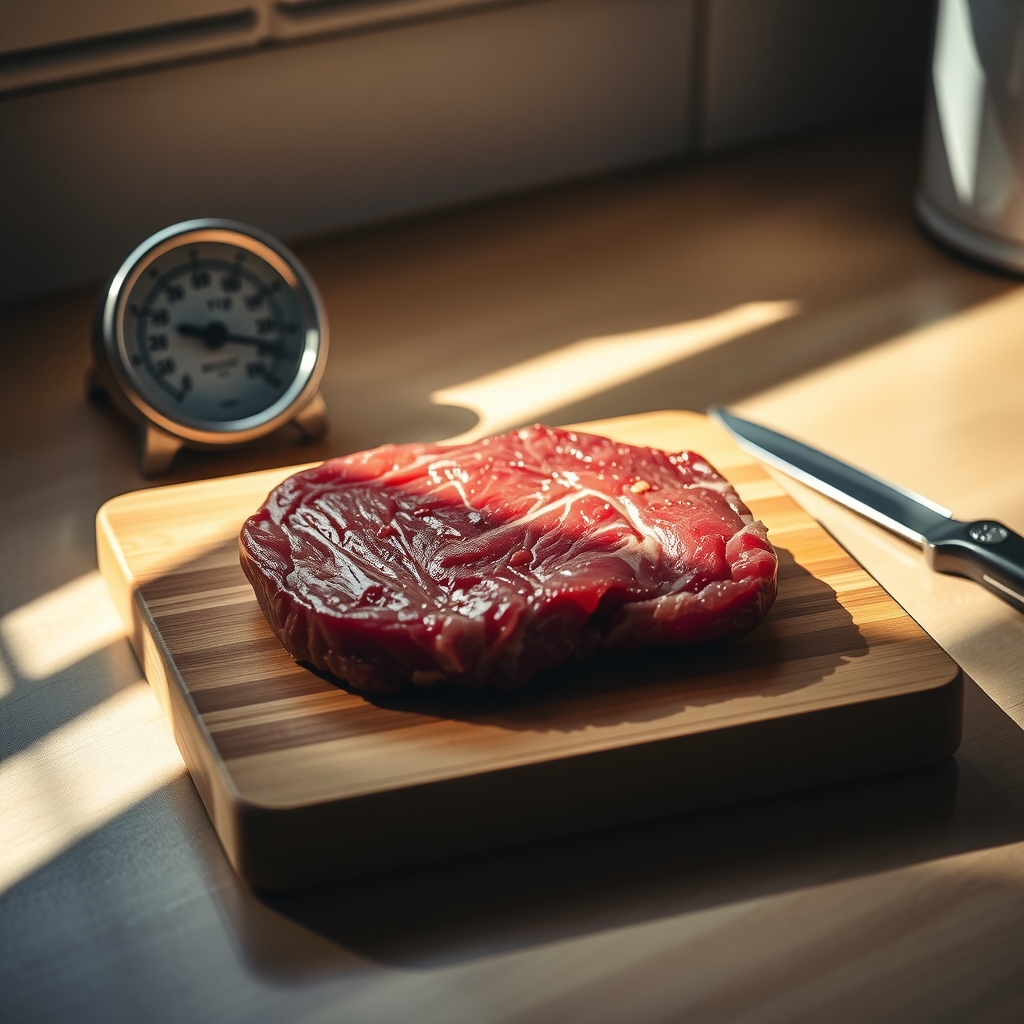
You found a package of chicken on the counter this morning that sat out since last night's dinner prep. The smell seems fine and you hate wasting food, so the instinct is to cook it thoroughly and move on. This article is for anyone who has stood in that exact spot, wondering if high heat can erase the risk of a simple mistake.
After reading, you will be able to:
- Explain why reheating does not undo toxins already produced by bacteria
- Identify the specific microbes that survive normal cooking temperatures
- Apply the two-hour rule without guessing or relying on smell
- Decide confidently when to discard meat instead of taking a chance
The stakes are higher than a wasted grocery bill
Foodborne illness from temperature-abused meat can cause days of misery or land vulnerable people in the hospital. Understanding the science behind the danger zone helps you protect your household without overthinking every meal. The following sections break down what actually happens when meat sits out and why the safest choice is often the simplest one: throw it out.
The Danger Zone: How Room Temperature Accelerates Bacterial Growth
Between 40 °F and 140 °F, most foodborne bacteria multiply rapidly. A single cell can become millions in a few hours, and the warmer the kitchen, the faster the clock ticks. Leaving raw or cooked meat on the counter overnight gives those microbes an uninterrupted window to reach dangerous levels.
Why the Range Matters
Below 40 °F bacterial metabolism slows enough that growth is minimal. Above 140 °F most vegetative cells die. In the middle, however, common pathogens such as Salmonella, Clostridium perfringens, and Staphylococcus aureus can double every 20 minutes under ideal conditions. Overnight exposure often means eight to twelve hours in that sweet spot — enough time for a microscopic contamination to become a serious dose.
Practical Checks
- Use a refrigerator thermometer to confirm the unit stays at 40 °F or colder.
- Set a timer when meat comes out for prep; two hours is the maximum at room temperature, one hour if the room is above 90 °F.
- Divide large roasts or pots of stew into shallow containers before chilling so the center cools through the danger zone quickly.
- If you discover meat has sat out longer than the limit, discard it. The cost of replacement is far lower than the risk of illness.
Heat-Stable Toxins: Why Cooking Cannot Reverse Bacterial Damage
When bacteria multiply in meat left at room temperature, many species produce metabolic byproducts called heat-stable toxins. Unlike the bacteria themselves, these protein-based poisons do not break down at normal cooking temperatures. Bringing the internal temperature of the meat to 165 °F (74 °C) will kill most vegetative cells, but the toxins they have already released remain chemically intact and biologically active. If you eat that reheated meat, you are consuming the poison along with the protein.
Why heat fails to fix the problem
Most common foodborne toxins — such as the enterotoxins produced by *Staphylococcus aureus* and the emetic toxin from *Bacillus cereus* — retain their structure and potency after 30 minutes at boiling temperature. Standard reheating methods (oven, microwave, stovetop, grill) rarely exceed 212 °F (100 °C) at the food surface, far below the sustained, extreme heat required to denature these specific proteins. Pressure canning reaches higher temperatures, but that process is designed for shelf-stable jars, not for salvaging a steak left on the counter.
Toxins that survive typical reheating
- *Staphylococcus aureus* enterotoxins (cause rapid-onset vomiting and diarrhea)
- *Bacillus cereus* emetic toxin (causes nausea and vomiting within 1–6 hours)
- *Clostridium perfringens* enterotoxin (produced in the gut after ingestion, but spores survive cooking and germinate later)
Because you cannot see, smell, or taste these toxins, the only reliable control is preventing their production in the first place. Keep raw and cooked meats out of the 40–140 °F (4–60 °C) danger zone; if the two-hour window has passed, discard the item rather than gambling on reheating.
Spore-Forming Bacteria: The Microbes That Survive Reheating
Some bacteria do not just grow and release toxins; they build armored survival capsules called endospores. When conditions turn harsh — such as the high heat of reheating — these spores shut down their metabolism and wait. Standard cooking temperatures kill the active cells, but the spores can survive boiling, baking, and even brief pressure cooking. Once the food cools back into the danger zone, the spores germinate into active bacteria again, often with fewer competing microbes to slow them down. This means a piece of meat left out overnight can harbor a second wave of contamination that reheating actually triggers rather than prevents.
Common spore-formers in meat
- *Clostridium perfringens* thrives in cooked meats cooling slowly at room temperature; its spores survive reheating and can cause intense abdominal cramping and diarrhea within hours.
- *Bacillus cereus* is often linked to rice but also grows on protein-rich foods; some strains produce a heat-stable emetic toxin that causes vomiting shortly after ingestion.
- *Clostridium botulinum* is rarer in aerobic conditions but can appear in anaerobic pockets of large roasts or vacuum-sealed packs; its spores survive normal reheating and the toxin is among the most potent known.
Because you cannot see, smell, or taste spores, the only reliable control is preventing their germination in the first place. Keep hot foods above 140 °F (60 °C) or chill them below 40 °F (4 °C) within two hours of cooking. If meat has been left out longer, discard it — reheating will not make it safe.
Time vs. Temperature: Why the Two-Hour Rule Exists
The two-hour rule is not an arbitrary number; it represents the practical limit for keeping bacterial growth slow enough that the food remains safe to eat later. At typical room temperatures, many common foodborne bacteria can double their population every 20 minutes. In two hours, a single cell can multiply into thousands, and in four hours, into millions. This exponential growth means the total bacterial load — and the toxins they produce — crosses a threshold where reheating becomes ineffective. The clock starts the moment the meat hits the counter, not when you finish cooking it or when you sit down to eat.
The Temperature Multiplier
Temperature dramatically changes the math. The "danger zone" spans 40°F to 140°F (4°C to 60°C), but the risk is not flat across that range. At 70°F, the two-hour window applies. At 90°F or above — common at picnics, in parked cars, or near stoves — the safe window shrinks to one hour because bacteria reproduce significantly faster. Conversely, if the meat was held just above 40°F, you have slightly more margin, but relying on that precision is risky without a verified thermometer. Many people find it helpful to treat any meat left out for an unknown duration as exceeding the limit.
Practical Tracking Habits
- Set a timer on your phone the moment cooked or raw meat leaves temperature control.
- Use shallow containers to cool leftovers rapidly before refrigerating; large pots stay in the danger zone too long.
- If you discover meat has been out past the limit, discard it. The cost of replacement is far lower than the cost of foodborne illness.
If you want this in more depth, our book Freezer Recipes: Healthy Make-Ahead Meals for Busy Weeks covers it step by step.
Sensory Deception: Why Smell and Appearance Are Unreliable Safety Indicators
You pull the container from the counter, give it a sniff, and it smells fine. The color looks normal, maybe just a little dull. Your brain registers "safe," but your nose and eyes are lying to you. The bacteria and toxins that cause foodborne illness are microscopic, odorless, and colorless. By the time meat develops a sour smell, a slimy film, or a gray-green patch, the population has often exploded into the millions. The absence of those signs means only that spoilage organisms haven't taken over yet—not that pathogenic bacteria or their toxins are absent.
The Silent Threshold
Many dangerous bacteria, including *Staphylococcus aureus* and *Clostridium perfringens*, produce heat-stable toxins while the meat sits in the danger zone. These toxins do not cloud the liquid, change the texture, or create a smell detectable by humans. A piece of chicken or beef can harbor a full dose of enterotoxin while looking and smelling identical to a fresh cut. Relying on sensory checks creates a false sense of security that leads directly to preventable illness.
- Spoilage bacteria and pathogenic bacteria are different populations; one signals age, the other signals danger.
- Toxins are chemical compounds, not living organisms, so they produce no gas or slime.
- Visual cues like iridescent sheen or color change indicate oxidation or spoilage, not toxin presence.
If the meat has been left out past the two-hour window, the only safe decision is to discard it. No inspection, smell test, or quick sear can verify safety.
High-Risk Meats: How Protein Density and Moisture Increase Hazard
Not all meats carry the same level of risk once they enter the danger zone. The combination of high protein content and abundant moisture creates an ideal environment for rapid bacterial multiplication and toxin production. Ground meats are especially vulnerable because the grinding process distributes surface bacteria throughout the entire batch, increasing the total volume where microbes can thrive. Similarly, poultry skin and processed products like sausages or deli meats often retain more surface moisture and have complex textures that protect bacteria from brief heat exposure.
Why Protein and Moisture Matter
Bacteria require water activity and nitrogen-rich nutrients to reproduce and synthesize toxins. Muscle tissue provides both in abundance. The denser the protein matrix and the higher the available water content, the faster populations of *Clostridium perfringens*, *Staphylococcus aureus*, and *Bacillus cereus* can reach dangerous levels. Cured or salted meats may slow growth slightly, but they do not stop it once temperatures rise above 40°F. Organ meats such as liver or kidney are even more perishable due to their extreme nutrient density and delicate structure.
- Ground beef, turkey, and chicken
- Stews, casseroles, and bone-in roasts that cool slowly
- Deli slices, hot dogs, and pre-cooked sausages
- Liver, kidney, and other organ meats
- Marinated or tenderized cuts where surface bacteria have been pushed inward
If any of these items have been left out for more than two hours, the safest action is disposal. No reheating method can reliably undo the toxins already produced in these high-risk matrices.
Safe Handling Protocols: What to Do Instead of Reheating Questionable Meat
When you discover meat has been left out past the safe window, the only reliable action is to discard it. No cooking method, marinade, or visual inspection can undo the risk. Wrap the item securely in a bag before placing it in the trash so pets or wildlife cannot access it. Clean every surface the meat touched — countertops, cutting boards, utensils, container exteriors — with hot, soapy water, then follow with a kitchen sanitizer or a diluted bleach solution (one tablespoon unscented bleach per gallon of water). Wash your hands thoroughly for at least twenty seconds afterward.
Quick decision checklist
- If the meat sat at room temperature longer than two hours (or one hour above 90 °F), throw it out.
- If you are unsure how long it was out, treat it as unsafe.
- Do not taste, smell, or reheat to "test" it.
- Replace the meal with a shelf-stable protein such as canned beans, tuna, or eggs cooked fresh.
Build habits that prevent the dilemma
Store raw meat on the bottom shelf of the refrigerator at 40 °F or below, and freeze anything you will not cook within one to two days. Thaw frozen items in the fridge, in cold water changed every thirty minutes, or in the microwave — never on the counter. Set a timer when you pull meat out to prep so it never sits forgotten. Keep a food thermometer handy; cook poultry to 165 °F, ground meats to 160 °F, and whole cuts to 145 °F with a three-minute rest. These routines cost only minutes and remove the guesswork that leads to risky shortcuts.
Key Takeaways and Your First Week
The core lessons from this article are straightforward: – Bacteria multiply rapidly in the danger zone (40°F–140°F), and reheating kills the germs but not the heat-stable toxins they already produced. – Spores from bacteria like *Clostridium perfringens* and *Bacillus cereus* survive boiling temperatures and can reactivate once the food cools down again. – You cannot rely on smell, color, or texture to detect these toxins; contaminated meat often looks and smells perfectly normal. – The two-hour rule (one hour above 90°F) is a hard safety limit, not a guideline for quality.
Your First Week
Start by auditing your current habits. Check your refrigerator temperature with an appliance thermometer to confirm it sits at 40°F or below. Place a timer or sticky note near the stove as a visual cue to refrigerate leftovers within two hours of cooking. Practice portioning large batches of meat into shallow containers before you sit down to eat; this speeds cooling and removes the temptation to leave the pot on the counter. If you discover meat that has sat out too long, discard it immediately without tasting. Replace the lost protein with shelf-stable options like canned beans, eggs cooked fresh, or peanut butter so the meal plan stays intact. Many people find that prepping a "plan B" protein on Sunday prevents risky decisions on busy weeknights.
More from the blog
- How to Stop Eating Out of Boredom and Make Intentional Food Choices
- How to Stop Nighttime Snacking When You're Not Hungry
- How to Design a Kitchen Layout That Makes Healthy Cooking Easier
From FitLife Solutions
Our book Freezer Recipes: Healthy Make-Ahead Meals for Busy Weeks goes further, as a digital eBook (PDF and EPUB) you can read on any device.
Browse all our practical health and fitness guides at fitlifesolutions.site.
New practical health guides and articles on WhatsApp: follow our channel.
This article is for general information only and is not a substitute for professional medical advice. Talk to your doctor or another qualified health professional before changing your diet, exercise or health routine, especially if you have a medical condition or take medication.