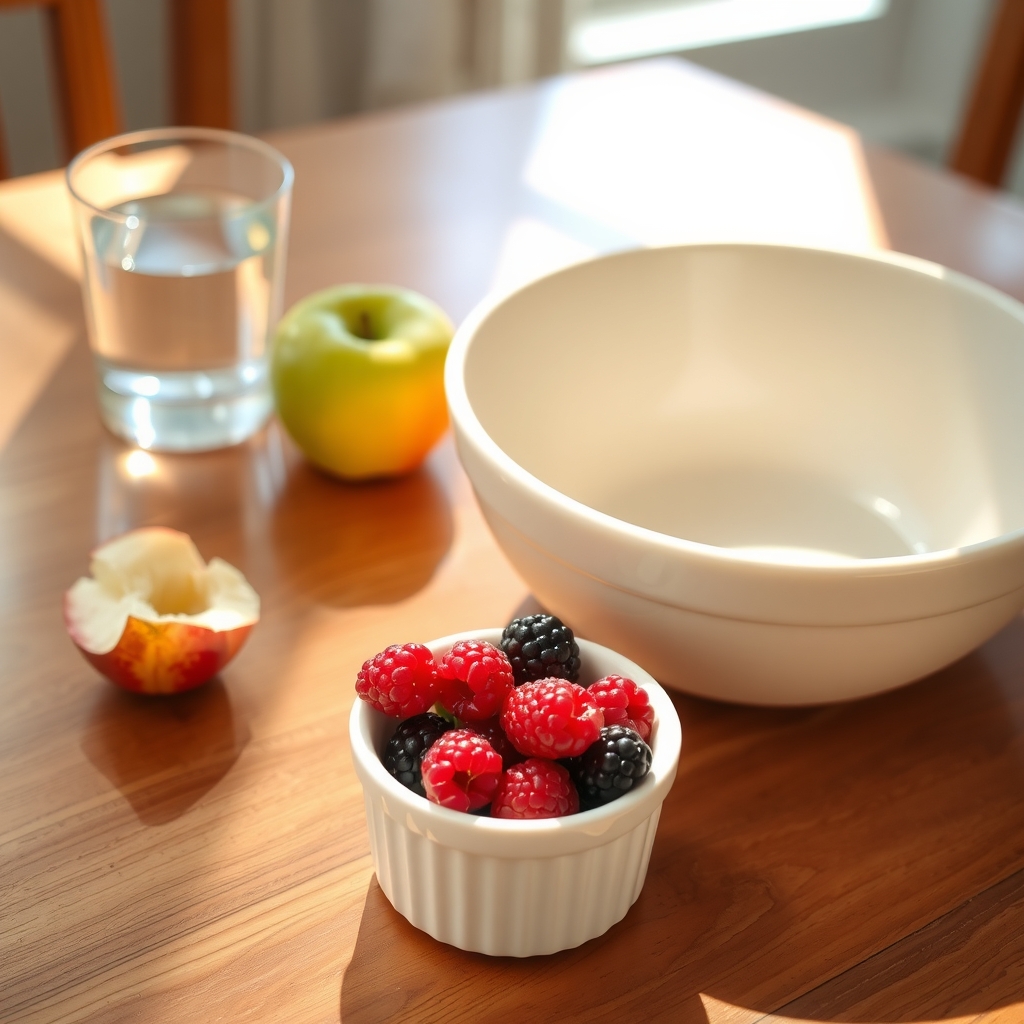
Most people who want to eat less find themselves staring at a half-empty plate feeling deprived, or cleaning a large plate purely out of habit. This section is for anyone who has tried cutting back only to battle cravings an hour later, or who suspects their "normal" serving size has quietly doubled over the years. It is also for people who do not want to weigh every gram of food or count calories to feel satisfied.
After reading this article, you will be able to:
- Estimate appropriate serving sizes using your hand and common kitchen items instead of a scale
- Build a plate that triggers fullness signals through protein, fiber, and volume
- Arrange food visually so a smaller portion looks complete
- Pre-portion snacks and meals to remove the decision-making that leads to overeating
- Slow down eating just enough for your body to register fullness
- Adjust portions up or down based on your actual activity level that day
- Navigate the first few weeks of smaller servings without white-knuckling hunger
These are practical tools you can start using at your very next meal. If you have a medical condition that affects nutrition needs, check with your doctor before making significant changes.
Visual Portion Guides Using Everyday Objects
A deck of cards is about the size of a cooked serving of meat, fish, or tofu — roughly three ounces. A tennis ball matches a half-cup of cooked rice, pasta, or beans. Your thumb from tip to first knuckle equals a tablespoon of peanut butter, oil, or salad dressing; the whole thumb is closer to two tablespoons. A closed fist approximates one cup of raw leafy greens or a medium piece of whole fruit. The palm of your hand, not including fingers, works for a standard protein portion at a main meal. A cupped hand holds about a half-cup of nuts, granola, or dried fruit. The tip of your index finger is roughly a teaspoon of butter, honey, or jam. A computer mouse is similar in volume to a medium baked potato or a standard slice of bread.
- Meat, fish, tofu: deck of cards (3 oz)
- Cooked grains, beans: tennis ball (½ cup)
- Nut butter, oils: thumb tip to first knuckle (1 tbsp)
- Leafy greens, whole fruit: closed fist (1 cup)
- Nuts, granola: cupped hand (½ cup)
- Butter, jam: fingertip (1 tsp)
- Baked potato, bread slice: computer mouse
These references are portable and require no scale. Many people find them faster than measuring cups once they practice a few times. Hand sizes vary, so treat them as starting guides and adjust based on hunger, fullness, and energy needs. If you have a medical condition that requires precise intake, check with a doctor or registered dietitian before relying on visual estimates alone.
The Protein-Fiber-Volume Formula for Satiety
Building meals around protein, fiber, and volume creates a natural brake on overeating because each component tackles hunger through a different pathway. Protein slows digestion and lowers the hunger hormone ghrelin; fiber adds bulk and feeds gut bacteria that signal fullness; volume — mostly water-rich vegetables and fruit — stretches the stomach without adding many calories. When you combine all three on one plate, you get a meal that feels large and satisfying but stays moderate in energy.
A simple way to assemble this is to start with a palm-sized portion of protein such as chicken, tofu, beans, or Greek yogurt. Add at least two cupped handfuls of non-starchy vegetables — broccoli, spinach, peppers, zucchini — for volume and fiber. Include a fist-sized portion of a fiber-rich carbohydrate like oats, quinoa, sweet potato, or berries. Finish with a thumb-sized amount of fat from olive oil, nuts, seeds, or avocado to aid nutrient absorption and flavor.
- Protein first: put it on the plate before anything else so it anchors the portion.
- Vegetables second: fill half the plate with color and crunch.
- Smart carbs third: choose intact grains or whole fruit over refined flour.
- Fat last: drizzle or sprinkle a measured amount.
If you still feel hungry 20 minutes after eating, add another vegetable serving or a few extra bites of protein before reaching for more starch. Many people find their baseline portions shrink naturally within a week or two as satiety signals recalibrate. If you have a medical condition that affects protein or fiber needs, check with your doctor before making large changes.
Pre-Portioning Strategies That Prevent Overeating
One of the most effective ways to avoid accidental overeating is deciding the portion before the food hits the plate. When you serve family-style from large bowls or cook straight from the pot, visual cues disappear and you rely on appetite alone, which often overshoots actual need. Start by portioning proteins, grains, and fats in the kitchen using the visual guides from the previous section — a palm of protein, a cupped hand of carbs, a thumb of fats — then bring only the plated meal to the table. Keep serving dishes off the table entirely; if seconds are genuinely wanted, the walk back to the kitchen creates a natural pause to check hunger.
For snacks and bulk foods, pre-portion into single-serve containers or zip-top bags immediately after grocery shopping. A large bag of nuts or trail mix becomes ten 1-ounce packs; a block of cheese becomes pre-sliced portions. This removes the need for willpower during a craving. Many people find that measuring once with a food scale or measuring cups, then storing in labeled containers, saves mental energy all week.
When cooking batch meals, divide the finished dish into equal containers before eating the first bite. If a recipe yields four servings, physically separate it into four containers. This prevents the "just a little more" creep that turns one portion into one and a half.
If you overshoot — perhaps you plated too much rice or grabbed an extra handful of nuts — don't scrape it back into the serving bowl if it's touched your plate. Instead, set the excess aside for tomorrow's lunch or a snack. This avoids waste while reinforcing the boundary you set. Over time, your eye calibrates and the need for measuring drops, but the habit of deciding first stays useful.
Plate Geometry and the Delboeuf Illusion Effect
The size of your plate changes how much food looks like "enough." This is called the Delboeuf illusion: the same portion appears larger on a small plate and smaller on a large one. Many people find they serve themselves significantly more when using a 12-inch dinner plate compared to a 9-inch salad plate, even when they intend to eat the same amount.
Switch to 9- or 10-inch plates for main meals. If your cabinet only holds oversized dishes, use the inner rim as a visual boundary — keep food inside the decorative border rather than filling to the outer edge. Bowls work the same way; a wide, shallow cereal bowl encourages a larger pour than a deeper, narrower one.
Color contrast matters too. A white plate on a white tablecloth makes portions harder to judge. Use a placemat or tablecloth that contrasts with your dishes so the plate’s edge is clearly defined. For the food itself, high contrast helps: pasta with red sauce on a white plate is easier to assess than fettuccine Alfredo on the same background.
- Serve vegetables and salad on the larger plates; use smaller ones for calorie-dense mains and starches
- Keep serving bowls off the table; plate food in the kitchen using the right-sized dish
- When dining out, ask for a to-go box at the start and set aside half the meal before eating
These visual cues work best alongside the protein-fiber-volume approach covered earlier. If you have a history of disordered eating or specific medical nutrition needs, check with a doctor or registered dietitian before restructuring your plate habits.
If you want this in more depth, our book Breathing Exercises for Calm: Practical Techniques to Reduce Stress and Improve Focus covers it step by step.
Pacing Techniques That Let Fullness Signals Catch Up
It takes roughly twenty minutes for your stomach to signal your brain that you have had enough. If you finish a meal in five, you will likely eat past comfortable fullness before the message arrives. Slowing down is the simplest way to let that signal catch up without relying on willpower.
Start by putting your utensil down between every bite. Pick it up only after you have swallowed. This single habit forces a natural pause and breaks the autopilot rhythm of hand-to-mouth motion. Chew each mouthful until the texture is gone — usually twenty to thirty chews — which also aids digestion and gives your taste buds time to register satisfaction. Sip water between bites rather than gulping at the end; the liquid adds volume and creates another natural speed bump.
Remove distractions. Eating while scrolling, working, or watching TV disconnects you from internal cues. Many people find they eat twenty percent less when they simply face a blank wall or look out a window. If you live with others, make conversation the pace-setter: talk, listen, then eat a bite.
Use a timer the first few weeks. Set it for twenty minutes and stretch your meal to match. If you finish early, sit with the empty plate for the remaining time before deciding on seconds. Often the urge passes.
- Put fork down between bites
- Chew until texture disappears
- Sip water regularly
- Eat screen-free
- Set a twenty-minute meal timer
If you consistently feel stuffed twenty minutes after meals, you are still eating too fast. Back off the pace another notch. If you have a medical condition that affects digestion or satiety signals, check with your doctor before making drastic changes to eating speed.
Adjusting Portions for Activity Level and Body Needs
Your baseline portion size works well for a sedentary day, but it will leave you under-fueled when you move more. Start by adding a cupped handful of carbohydrate — rice, potato, oats, fruit — to the meal immediately before or after your longest bout of activity. If you strength-train, add an extra palm of protein at the next meal. On rest days, keep the plate as built in the earlier sections: half non-starchy vegetables, one palm of protein, one cupped hand of carbs, one thumb of fat.
Listen to recovery signals. Waking up ravenous, struggling to hit usual weights, or feeling irritable mid-afternoon often means yesterday’s portions were too small for the work you did. Conversely, if you feel sluggish, bloated, or notice weight creeping up without a change in training, trim the added carbohydrate or fat thumb first; leave protein and vegetables untouched.
- Sedentary day: baseline plate only.
- Moderate activity (brisk walk, easy bike, yoga): +1 cupped hand carbs at one meal.
- Hard training (intervals, heavy lifting, >90 min sport): +1 cupped hand carbs pre- and post-session, +1 palm protein at next meal.
- Two-a-day sessions: repeat the hard-training additions at both meals surrounding workouts.
Body size shifts the absolute amounts. A larger hand means a larger portion; a smaller hand means less. That built-in scaling keeps the method personal without counting. If you have a medical condition that affects energy needs — thyroid issues, diabetes, pregnancy, recovery from illness — check with your doctor or a registered dietitian before making large adjustments. Small, weekly tweaks based on hunger, energy, and performance keep portions aligned with real life.
Managing Hunger Cues During the Adaptation Period
The first two weeks of smaller portions often bring a spike in hunger that feels urgent but is largely habitual. Your stomach and hunger hormones are recalibrating to a new volume baseline, and the brain may misinterpret the absence of overfullness as emptiness. Many people find it useful to label the sensation: "This is adjustment hunger, not emergency hunger." Pause for sixty seconds, drink a glass of water, and ask whether you feel physical signs like stomach growling or low energy, or simply the urge to keep eating.
If the hunger is physical, add a low-calorie volume booster rather than returning to the old portion. A cup of broth-based soup, a side of steamed greens, or an extra serving of the protein already on your plate can close the gap without derailing the new pattern. Keep a small stash of ready-to-eat vegetables — baby carrots, snap peas, cherry tomatoes — for moments when the urge to snack feels automatic.
- Brush your teeth or rinse with mint mouthwash after the meal; the flavor shift signals "eating is done."
- Set a kitchen timer for twenty minutes after you finish; if hunger persists, eat a planned mini-snack such as a hard-boiled egg or a few almonds.
- Track sleep and stress; both amplify appetite hormones and make adaptation feel harder.
If intense hunger, dizziness, or irritability lasts beyond a few days, check with a doctor to rule out medical causes or medication effects. Most people notice the urgency fades as the body learns that the new portion reliably delivers enough fuel.
Putting It Together
Start by picking three meals this week where you will use the smaller plate and the protein-fiber-volume formula. Keep the other meals exactly as they are so the change feels manageable rather than restrictive. Before each of those three meals, portion the protein and carbs in the kitchen using your hand or a measuring cup, then fill at least half the plate with vegetables or salad. Put the serving bowls away before you sit down.
Eat those meals without screens. Put your fork down between bites and check in halfway through to see if you are still physically hungry. If you finish the plate and still want more, wait ten minutes and drink a glass of water. Often the urge passes. If it does not, add a second helping of vegetables or a piece of fruit rather than more starch or fat.
Track nothing more complicated than a checkmark on a calendar for each meal you followed the plan. At the end of the week, notice which days felt easiest and which felt like a struggle. Use that observation to choose three more meals for the following week. If hunger feels sharp, persistent, or comes with dizziness or irritability, check in with a healthcare provider to rule out other causes.
More from the blog
- How to Estimate Portion Sizes Using Your Hand
- Healthy Breakfast Ideas Without Eggs
- How to Stop Nighttime Snacking When You're Not Hungry
From FitLife Solutions
Our book Breathing Exercises for Calm: Practical Techniques to Reduce Stress and Improve Focus goes further, as a digital eBook (PDF and EPUB) you can read on any device.
Browse all our practical health and fitness guides at fitlifesolutions.site.
New practical health guides and articles on WhatsApp: follow our channel.
This article is for general information only and is not a substitute for professional medical advice. Talk to your doctor or another qualified health professional before changing your diet, exercise or health routine, especially if you have a medical condition or take medication.